
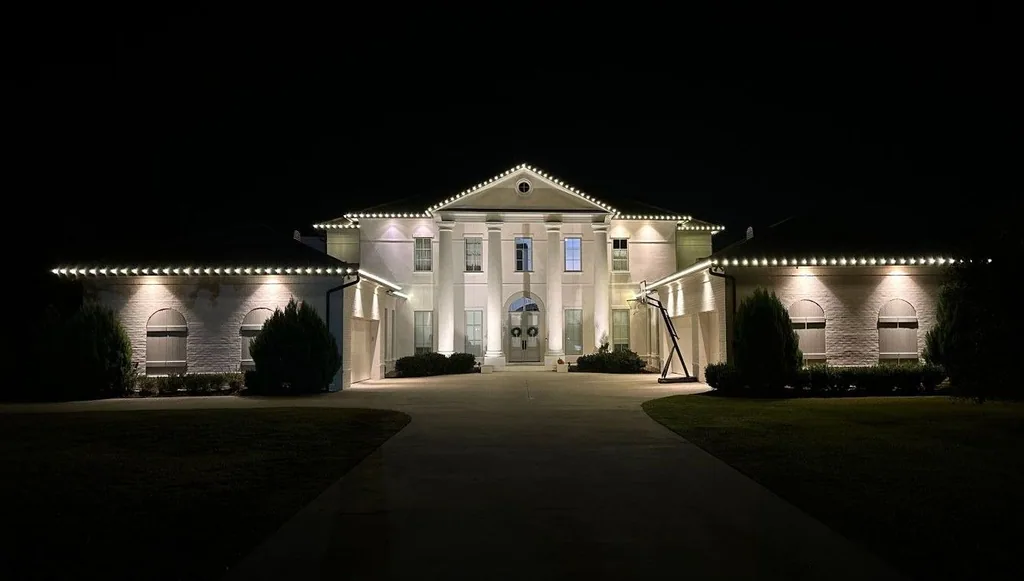
Commercial installation designs and installs holiday lighting for customer-facing properties — coordinated around business hours, brand presentation, customer traffic, and a maintenance plan that keeps the display looking finished all season.
Commercial holiday lighting is a customer-experience project, a visibility project, and an operational project at the same time. The display must look polished, support traffic, and remain serviceable throughout the season.
The design should account for the building's strongest lines, customer approach, signage, entrances, photo opportunities, business hours, and maintenance access.
Why a professional system performs better
Stronger seasonal visibility
A clear concept helps the property stand out after dark and improves the customer arrival.
Professional presentation
Color, spacing, brightness, and decoration choices can align with the business instead of looking improvised.
Less staff disruption
Employees do not have to source materials, climb ladders, troubleshoot cords, or manage removal.
Planned maintenance access
The display is laid out so service can happen without rebuilding the entire system.
Who this service is built for
- Property managers overseeing retail centers or office parks
- Restaurant and hospitality owners building a seasonal atmosphere
- Churches, schools, and community organizations
- Apartment and multifamily communities
- Multi-building or multi-location businesses
Property types
- Retail storefronts and shopping centers
- Restaurants and hospitality properties
- Professional offices and medical buildings
- Churches and schools
- Apartment and multifamily communities
- Multi-building or campus-style properties
- Municipal or public-facing displays
Design options
- Storefront and entry-focused packages for street visibility
- Brand-aligned color palettes for customer-facing signage
- Photo-area installations for marketing and social content
- Multi-building coordination for a consistent look across a property
What's included
- Commercial property walkthrough
- Visibility and customer-approach review
- Building, entry, landscape, and photo-area design
- Installation schedule coordinated around operations
- Timer and operating-hour setup
- In-season maintenance plan
- Post-season removal schedule
- Multi-season expansion roadmap
What's not included
- Interior decorating or in-store displays
- Signage design or permanent brand installations
- Structural, electrical, or facade repairs
- Year-round or permanent architectural lighting (unless separately confirmed)
Materials and equipment
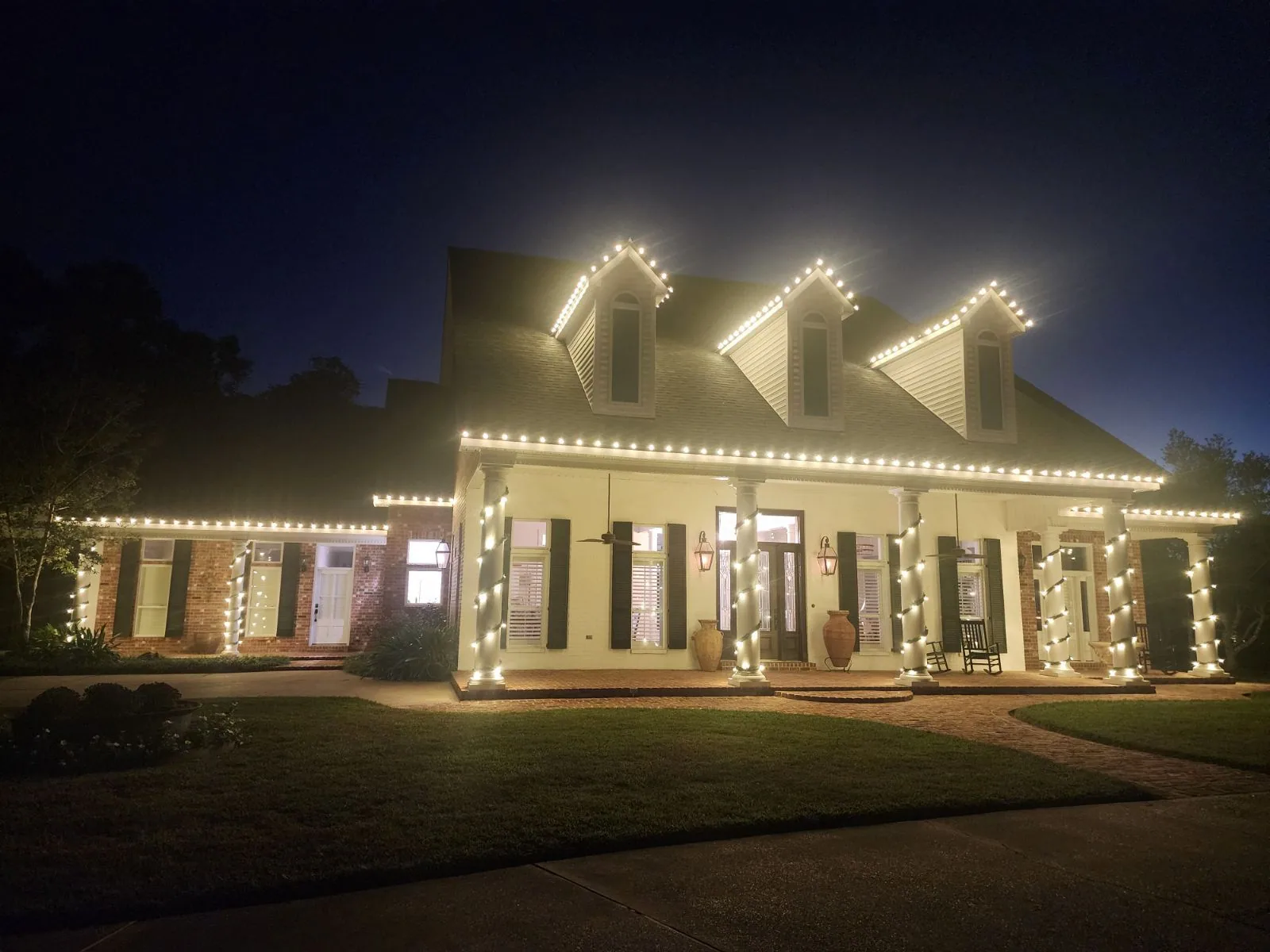
- Commercial-grade exterior LED systems built for extended nightly operation
- Weather-rated attachment hardware suited to commercial facades
- Timers aligned to business operating hours
- Connection layouts planned for public-traffic areas
How the project works
- 01
Site walkthrough
Review the property with operations in mind — traffic flow, access points, and brand goals.
- 02
Design and proposal
Present a concept covering scope, materials, and installation timing.
- 03
Scheduled installation
Install around business hours to minimize disruption to customers and staff.
- 04
In-season maintenance
Service the display through one reporting channel for the length of the season.
- 05
Coordinated removal
Remove on a schedule that fits the property's operations and any lease requirements.
Safety and property protection
- Installation scheduled to avoid customer-traffic hours where possible
- Lift or ladder work planned around public walkways and parking areas
- Attachment methods reviewed against facade materials and any landlord restrictions
- Fire and egress clearance maintained at entrances
Electrical considerations
- Circuit capacity reviewed against existing building electrical load
- Timer programming aligned to operating hours and energy expectations
- Outdoor-rated connections used throughout, especially near public areas
Property-protection practices
- Attachment methods reviewed with property management or landlord requirements
- Signage, awnings, and facade finishes protected during installation
- Documentation kept for multi-tenant or leased properties
Commercial displays get one maintenance contact for the season, with response coordinated around your operating hours and customer traffic.
Removal is scheduled around your business calendar — including any lease-driven deadlines — rather than a fixed date that ignores operations.
For multi-season commercial clients, storage and labeling can be planned to speed up next year's reinstallation — confirm this as part of your service agreement.
What affects pricing
- Building size, number of elevations, and facade complexity
- Access requirements (lift equipment, height, multiple buildings)
- Installation timing constraints (after-hours, weekend-only, phased)
- Whether maintenance and removal are bundled into a season-long agreement
Commercial projects should be booked earlier than residential ones — budget approval, landlord permission, and after-hours scheduling all take lead time.
Before your consultation
- Confirm landlord or property-management approval where required
- Identify brand colors or existing exterior lighting to coordinate with
- Share customer traffic patterns and any no-installation zones
- Confirm certificate-of-insurance or access requirements for the property
Professional vs. DIY
Coordinated around business hours and customer traffic
Depends on staff availability outside their normal role
Controlled palette aligned to brand and signage
Inconsistent materials purchased over time
One maintenance contact for the season
No defined process when a section fails
Problems this prevents
- A display that looks improvised next to professional signage
- Staff time lost to ladder work instead of customer service
- Outages going unaddressed during the highest-traffic weeks
- Removal delays that conflict with lease or landlord requirements
Local considerations
Commercial corridors across Lafayette Parish range from standalone restaurants to multi-tenant shopping centers — the design and scheduling plan has to match the property type and landlord requirements, not a one-size approach.